Trauma-informed care is one of the most widely discussed concepts in pediatric therapy, yet its application in everyday clinical practice is not always clearly defined. Most clinicians know its core principles, but translating them into specific clinical decisions during a therapy session can be harder. This distinction matters because trauma-informed care is not simply a philosophy to embrace. It is an approach reflected in the intentional choices clinicians make throughout each interaction.
This article explores what trauma-informed care looks like in practice during a pediatric therapy session, including how clinicians establish connection, support transitions, introduce therapeutic demands, and respond when a child communicates refusal. The goal is to move beyond theory and examine practical strategies that can be incorporated into everyday clinical practice. For clinicians seeking to distinguish genuinely trauma-informed care from simply being kind or accommodating, these practical applications provide a useful starting point.
What it actually means, in one paragraph
At its core, trauma-informed care recognises that a child’s behaviour often becomes more understandable when we consider what is happening within their nervous system. A child who has experienced adversity may perceive a raised voice, an unexpected change, or a therapeutic demand as threatening, even when no threat is intended. Trauma-informed practice is therefore not simply another technique to add to a clinician’s toolkit. It is a clinical framework that shapes how we interpret behaviour and respond to the child, prioritising felt safety, predictability, autonomy, and therapeutic relationship. When a child feels safe and regulated, they are better able to engage, participate, and learn.
It starts before the child speaks
The therapeutic session begins the moment a child encounters the clinician, not when the first activity begins. A trauma-informed greeting is predictable, respectful, and low-pressure. The clinician may position themselves at the child’s eye level rather than standing over them, allow the child to initiate physical proximity rather than reaching toward them, and maintain a calm, warm tone of voice and facial expression. When a child needs additional time to settle, allowing that space can help establish a sense of safety and control.
These seemingly small interactions can shape the child’s experience of the entire session. When children feel welcomed and understood rather than directed or managed, they are more likely to feel safe, establish trust, and become ready to participate and engage in therapy.
Transitions are the hidden landmine
Transitions can be some of the most challenging moments for children during a therapy session. Moving from the waiting area into the therapy space, shifting from a preferred activity to a more demanding task, or preparing to leave at the end of a session can all increase stress and dysregulation. Often, the difficulty lies not in the activity itself, but in the uncertainty surrounding the change.
Trauma-informed transitions make change more predictable and manageable. Clinicians can provide advance notice before a transition, use visual supports or familiar routines to communicate what will happen next, and maintain enough consistency in the structure of the session for the child to anticipate what is coming. The goal is to reduce unexpected changes and increase the child’s sense of predictability and control. When children know what to expect, they have greater opportunity to prepare, regulate, and participate successfully.
How Therapeutic Demands Are Delivered
Every therapy session involves asking a child to participate in activities that may be challenging. Trauma-informed care does not eliminate therapeutic expectations; it considers how those expectations are communicated and supported. Offering meaningful choices, even small ones, can help restore a sense of autonomy and control. A first-then approach can make a challenging activity feel more manageable by connecting it with a preferred activity or outcome. Tone also matters. A calm invitation can communicate collaboration and safety in ways that a directive or command may not.
The goal is not to reduce therapeutic expectations, but to reduce unnecessary power struggles. The clinician remains responsible for supporting participation and progress while working collaboratively with the child rather than simply directing them through the process.
Responding to Corrections, Errors, and Refusal
How a clinician responds when a child makes a mistake, refuses a task, or becomes dysregulated can have a significant impact on the child’s sense of safety and trust. A trauma-informed response prioritises regulation before correction or consequence. The clinician maintains a calm and consistent presence, acknowledges what the child may be communicating without judgment, and adjusts the level of demand when necessary rather than escalating the interaction.
This process is known as co-regulation. Through repeated experiences with a calm, responsive adult, children can gradually develop greater capacity for self-regulation and learn that moments of distress can be met with safety, support, and understanding.
Common Mistakes Well-Meaning Clinicians Make
Trauma-uninformed interactions do not necessarily reflect a lack of compassion or clinical expertise. They can occur when well-intentioned clinicians rely on familiar practices without considering how those practices may be experienced by a child. Common examples include:
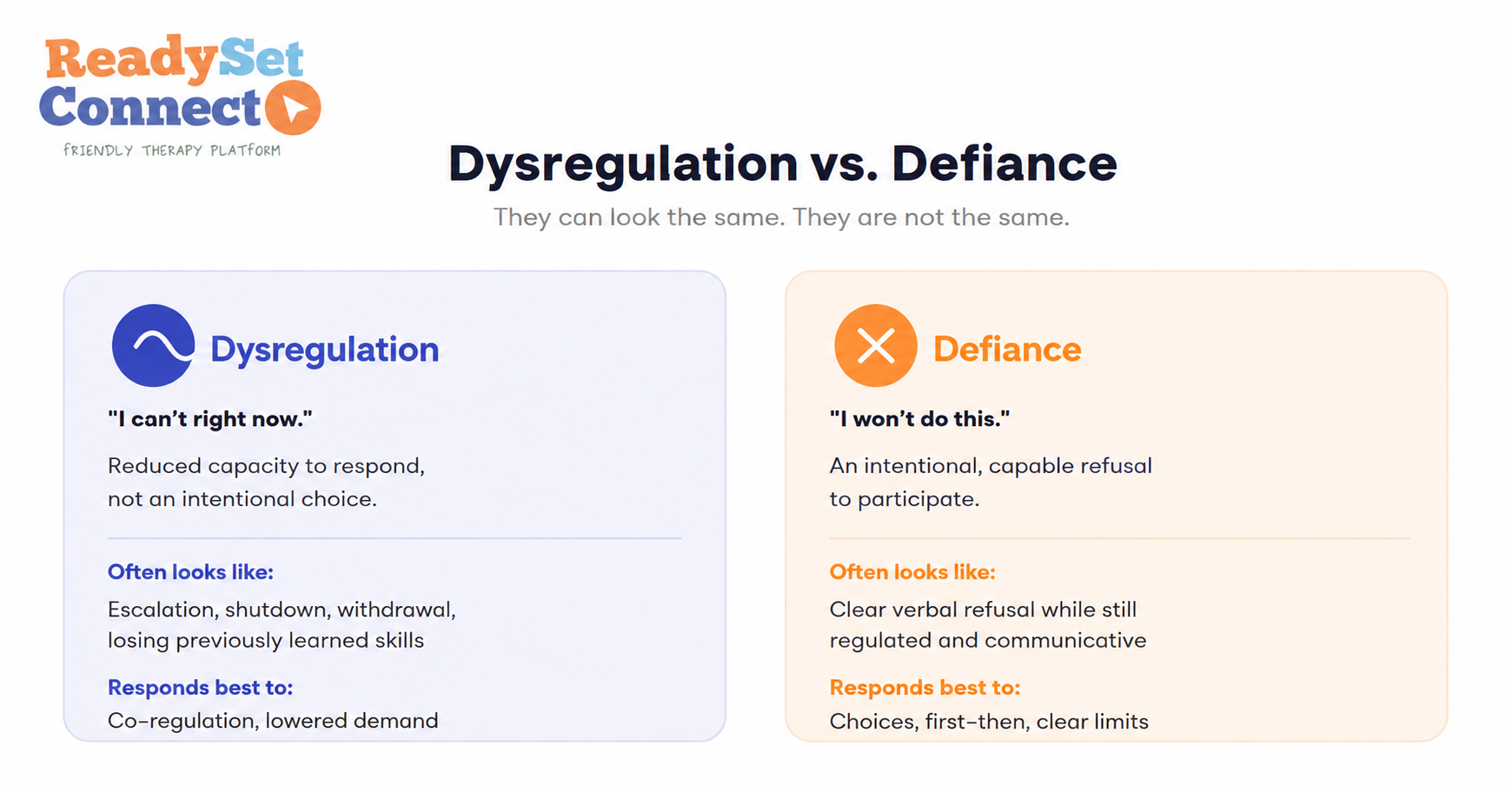
Interpreting dysregulation as defiance. A child who is unable to comply may appear similar to a child who is unwilling to comply, but the underlying needs and appropriate clinical responses may be very different.
Continuing through significant distress. Prioritising task completion despite clear signs of distress can communicate that the child’s cues and boundaries are secondary to completing the activity.
Overrelying on rewards and consequences. Behavioural strategies can be useful when applied thoughtfully, but excessive reliance on external reinforcement may shift attention away from the therapeutic relationship and the child’s underlying needs.
Interpreting refusal personally. A child’s refusal is information about their current state, needs, or capacity. It is not necessarily a rejection of the clinician or the therapeutic relationship.
Recognising these patterns is not a sign of clinical failure. It is an important part of reflective practice. Trauma-informed care requires clinicians to continually examine not only what they are asking children to do, but also how their approach may be experienced by the child.
Trauma-Informed Care Does Not Mean the Absence of Boundaries
One common misconception about trauma-informed care is that it means allowing children to do whatever they choose. It does not. Trauma-informed practice is not permissive, and clear boundaries, expectations, and limits remain an important part of effective pediatric therapy. In fact, children may feel more secure when the adults around them provide consistent expectations and predictable responses.
The distinction lies in how those boundaries are communicated and maintained. Clinicians can establish limits with both clarity and compassion, remaining calm, regulated, and connected rather than relying on punitive responses. Structure and warmth are not opposing approaches. A trauma-informed session may, in fact, require greater structure and consistency because predictability can help children develop a sense of safety, understand what to expect, and engage more successfully in therapy.
A Quick Self-Audit for Your Next Session
Before your next session, consider the following questions:
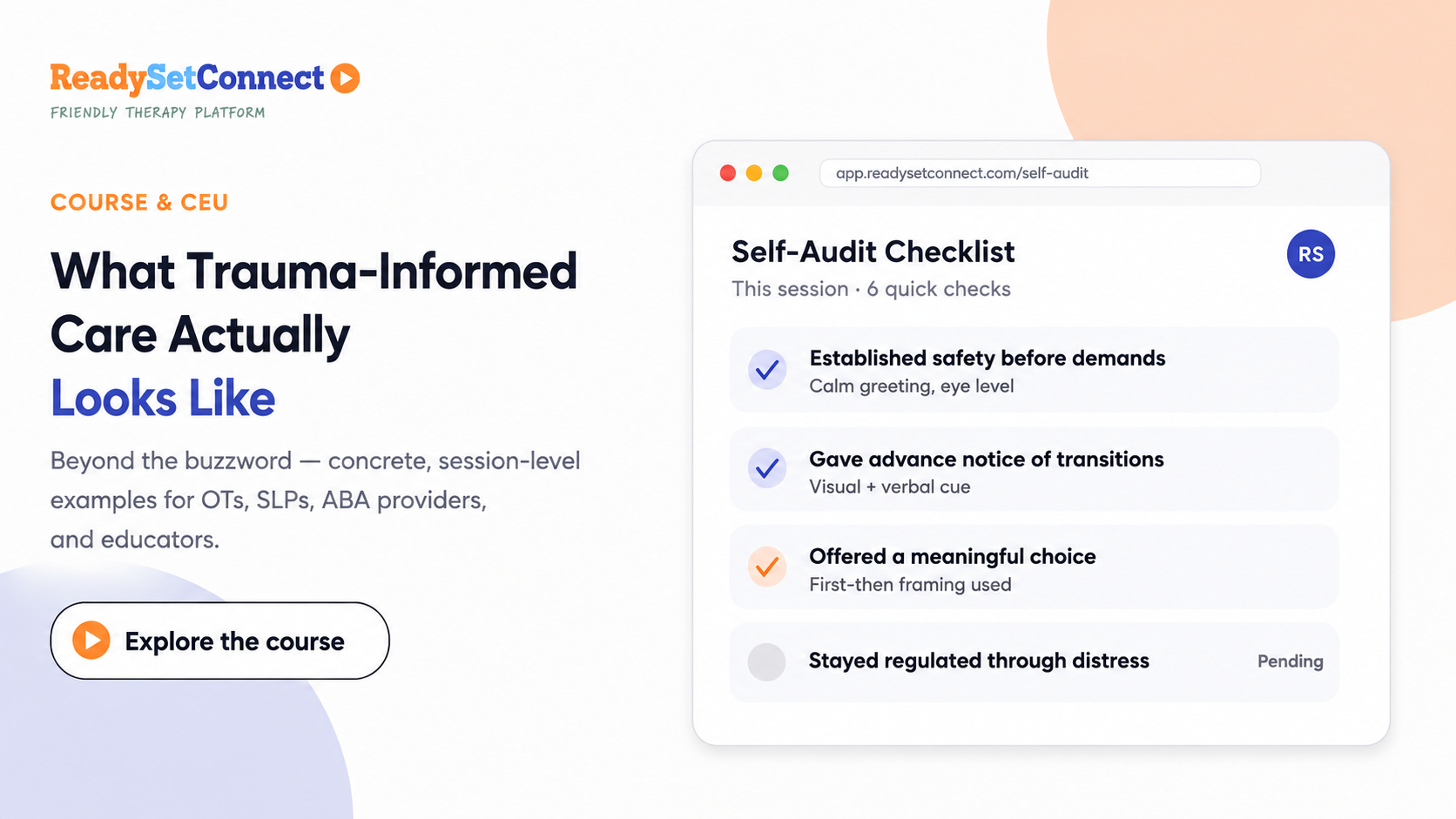
Did I establish a sense of safety before making therapeutic demands?
Did I provide advance notice of transitions?
Did I offer meaningful choices and opportunities for autonomy?
Did I remain regulated when the child became dysregulated?
Did I respond to distress with curiosity rather than control?
Did I end the session in a way that maintained connection and a sense of safety?
You will not be able to answer “yes” to every question in every session, and that is not the goal. The value lies in noticing, reflecting, and identifying opportunities to strengthen your practice. Trauma-informed care is not about getting every interaction right. It is about staying attentive to how the child experiences your clinical approach and adjusting when needed.
Want to translate these principles into practical clinical skills? Explore our accredited Trauma-Informed Communication course to deepen your understanding, strengthen your clinical approach, and earn CEU credit as you build your trauma-informed practice.
Trauma-informed care is not a qualification earned once and then set aside. It is an ongoing clinical approach that develops through reflection, experience, and a deeper understanding of what a child’s behaviour may be communicating. The impact is often found in the small, consistent choices clinicians make: offering a warm and respectful greeting, preparing a child for transitions, presenting therapeutic demands collaboratively, and responding calmly during moments of distress.
Over time, these choices can influence not only how a therapy session unfolds, but also how a child comes to experience and anticipate interactions with the adults supporting them. For clinicians considering further professional development, it is also important to understand how formal training may contribute to licensure renewal requirements before selecting a course.
Frequently Asked Questions
What is trauma-informed care in pediatric therapy?
Trauma-informed care is an approach that recognises how a child’s experiences and nervous system may influence their behaviour and adjusts clinical interactions accordingly. In practice, it involves prioritising felt safety, predictability, autonomy, and therapeutic relationships to support a child’s capacity to regulate, participate, and learn.
Is trauma-informed care only for children with a known history of trauma?
No. Clinicians may not have complete information about a child’s experiences, and trauma-informed principles can support engagement and participation across a pediatric caseload. Providing predictability, opportunities for choice, and responsive co-regulation can benefit children regardless of whether a trauma history is known or documented.
How is trauma-informed therapy different from conventional therapy?
Trauma-informed care is a clinical lens rather than a separate therapeutic method. Clinicians continue to work toward established treatment goals while considering how they communicate expectations, provide opportunities for choice, support regulation, and respond to distress. The emphasis is on maintaining safety and connection while supporting meaningful participation.
How can I tell if a child is dysregulated rather than defiant?
Dysregulation may reflect a child’s reduced capacity to respond effectively in the moment rather than an intentional refusal to participate. Signs may include escalation, withdrawal, shutdown, difficulty processing language, or reduced ability to use previously learned skills. When a child is significantly dysregulated, reasoning, rewards, or consequences may be less effective. Supporting regulation and temporarily adjusting demands may help the child return to a state in which participation is more achievable.
Can I earn CEU credit for trauma-informed training?
Yes. Accredited continuing education courses, including ReadySetConnect’s Trauma-Informed Communication course, may provide CEU credit that can contribute toward professional development requirements. Requirements vary by profession, credential, and jurisdiction, so clinicians should confirm how specific CEU credits apply to their individual licensure or certification requirements.
How can I begin incorporating trauma-informed care into my practice?
Start with one interaction and make one intentional change. You might introduce a more predictable greeting, provide advance notice before transitions, or offer a meaningful choice within a challenging activity. Consistent, incremental changes can help clinicians integrate trauma-informed principles into everyday practice without attempting to change every aspect of their approach at once.
Continue developing your trauma-informed approach with the Trauma-Informed Communication course, where you can strengthen your clinical skills while earning accredited CEU credit. You can also explore the full continuing education library to find additional courses aligned with your professional development goals.