Running a therapy practice has never been simple. Between sessions, documentation, scheduling, billing, and parent or caregiver communication, your day can feel full before it even begins. For many occupational therapists, speech-language pathologists, ABA providers, and psychologists, spreadsheets became the first solution to keep everything organized.
At the beginning, they work well enough. A simple sheet for scheduling, another for billing, and maybe one more for tracking client notes. It feels affordable and manageable. But as your caseload grows and your team expands, something changes. The system that once felt helpful slowly becomes overwhelming. And that’s when many therapists realize: this isn’t sustainable anymore.
The Hidden Limits of Spreadsheets
Spreadsheets were designed for general data tracking, not healthcare operations. They weren’t built to handle protected client information, real-time scheduling, or the complex workflows of a therapy practice. Yet many clinics try to stretch them far beyond their limits.
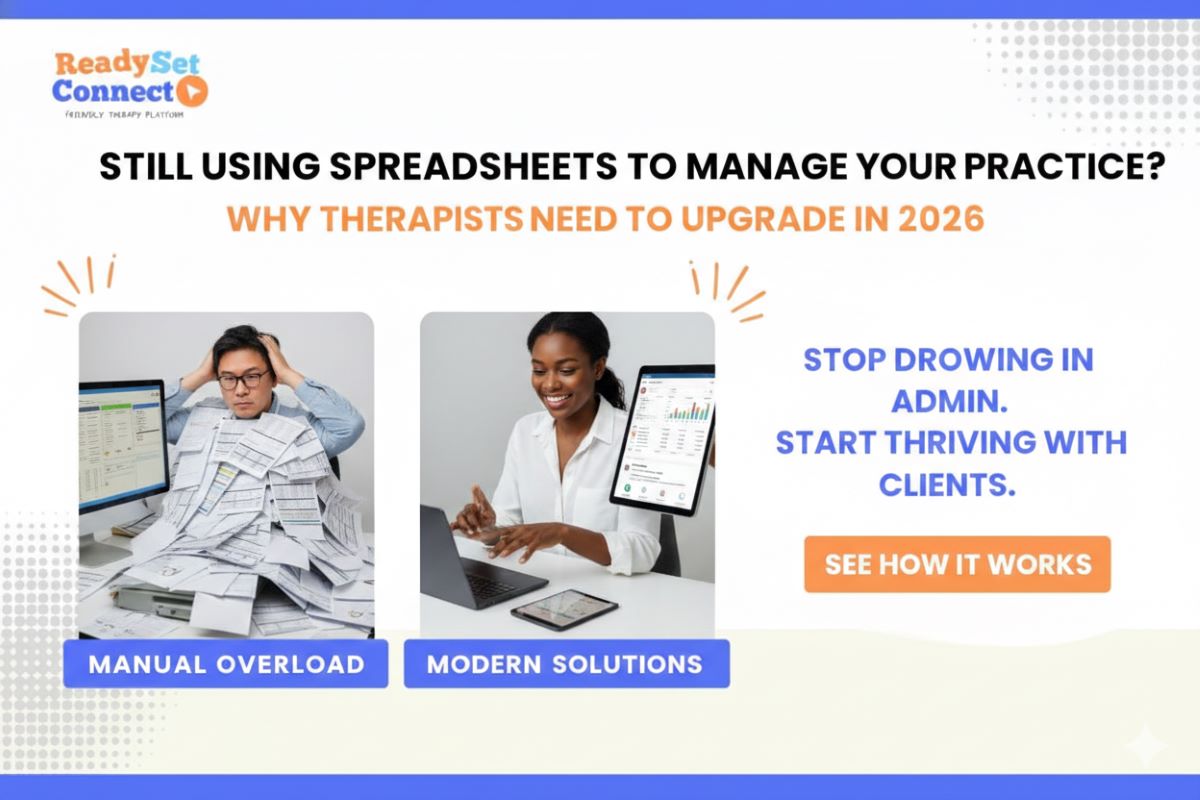
At first, it might only take a few extra minutes each day. But over time, those minutes turn into hours of manual work. Copying and pasting information, updating changes across multiple tabs, and double-checking everything become part of your daily routine. What looks like a free system quickly turns into a hidden time drain.
The Real Cost Isn’t Money but Time and Energy
It’s easy to think that spreadsheets don’t cost anything. But when you look closer, they cost something much more valuable: your time and mental energy.
Imagine spending just 10 extra hours per week on admin tasks. Over a year, that’s more than 500 hours, the equivalent of several full workweeks spent on paperwork instead of therapy. That time could be used to see more clients, improve treatment plans, train staff, or simply go home earlier and recharge.
There’s also the risk of human error. When everything is entered manually, mistakes are inevitable. A small typo in a billing code or a missed appointment entry can delay payments or create unnecessary stress. When multiple therapists access the same sheets, versions get mixed up, and communication breaks down. The highest cost is burnout.
Most therapists don’t feel exhausted because of the therapy itself. They feel drained because of everything surrounding it. Staying late to finish notes or fix administrative issues slowly takes a toll. Over time, that pressure adds up.
Why 2026 Demands a Smarter Approach
The way therapy practices operate has changed dramatically in recent years. Telehealth is now common. Hybrid schedules are normal. Insurance requirements are more detailed. Teams often work across multiple locations or even remotely.
Managing all of that through spreadsheets simply isn’t realistic anymore. Modern practices need systems that automate repetitive tasks and keep everything connected. Instead of constantly updating files, you need tools that update automatically. Instead of chasing information, you need everything centralized and easy to find. This is exactly where therapy practice management software makes a difference.
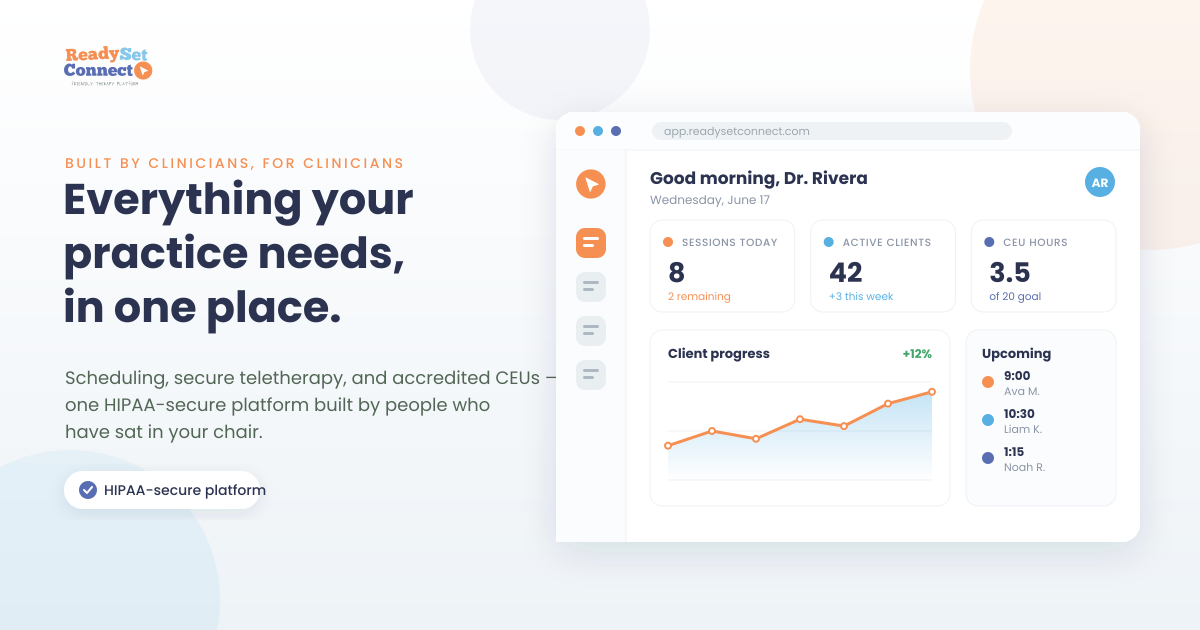
Rather than acting as a digital notebook, it works like a full assistant for your practice by handling scheduling, documentation, billing, and communication in one place.
How Modern Software Changes Your Day-to-Day Work
When therapists move away from spreadsheets and into a dedicated system, the difference is often immediate. The goal isn’t to add more technology to your life but to remove unnecessary work.
For example, scheduling becomes far simpler. Instead of manually adjusting calendars or texting reminders, the system can automatically manage bookings, send confirmations, and reduce no-shows. What used to take hours each week happens quietly in the background.
Documentation also feels less overwhelming. Session notes, treatment plans, and client records live securely in one place, so you’re not searching through folders or files. Everything is accessible when you need it.
Billing becomes faster and more accurate too. Invoices can be generated automatically, payments tracked in real time, and fewer errors mean fewer delays. Many practices notice improved cash flow simply because their processes are smoother.
These improvements often show up in practical ways like:
- Automated reminders that reduce missed appointments
- Centralized client records
- Faster documentation workflows
- Online payments and invoicing
- Real-time team collaboration
- Secure data protection
Small changes like these create a big impact over time.
Why Occupational Therapy Practices Feel the Difference Most
While every therapy discipline benefits from better systems, occupational therapists often feel the strain of spreadsheets even more.
OT schedules are rarely simple. You might be traveling between schools, homes, and clinics, while also managing evaluations, progress reports, and coordination with families or teachers. Each client may have different goals, service locations, and documentation requirements.
Trying to track all of that manually can feel chaotic.
Purpose-built occupational therapy software is designed specifically for these workflows. It helps you manage diverse schedules, document progress efficiently, and keep all information organized without extra steps.
Instead of worrying about logistics, you can focus on what really matters: helping clients build independence and reach their goals.
And that shift — from admin stress to clinical focus — is where the biggest relief happens.
How to Know It’s Time to Upgrade
Many therapists hesitate to change systems because what they have “works well enough.” But there’s a difference between something working and something working efficiently.
If you often stay late finishing admin work, struggle with scheduling mistakes, or feel overwhelmed trying to scale your practice, your current setup may be holding you back.
Common signs it’s time to upgrade include:
- Frequent scheduling conflicts
- Slow or confusing billing processes
- Multiple disconnected tools
- Growing teams that need better coordination
- Feeling stuck or burned out
- Wanting to grow but lacking the systems to support it
If any of these sound familiar, it’s likely not a people problem — it’s a process problem.
And processes can be fixed.
A Better Way Forward
Switching from spreadsheets to software can feel intimidating at first. Change always does. But most modern platforms are designed with therapists in mind. They’re intuitive, supportive, and built to make your life easier from day one.
Once the repetitive tasks are automated, many practice owners say they feel lighter. Less stressed. More in control. Because the truth is simple: you didn’t choose this profession to manage spreadsheets.
You chose it to help people.
Upgrading to modern therapy practice management software isn’t about adding complexity. It’s about simplifying your work so you can focus on care, not clerical tasks.
As we move into 2026, the practices that thrive will be the ones that protect their time, their energy, and their teams. Sometimes the most powerful upgrade isn’t hiring more staff or working longer hours.
It’s simply choosing better tools.
See how ReadySetConnect supports growing therapy practices
Frequently Asked Questions
1. What is therapy practice management software?
Therapy practice management software is an all-in-one system that helps clinics handle scheduling, documentation, billing, telehealth, and client communication in one secure platform. It replaces manual tools like spreadsheets and reduces administrative workload.
2. Why are spreadsheets not ideal for managing a therapy clinic?
Spreadsheets require manual updates, increase the risk of errors, and don’t offer automation, reminders, or secure data protection. As practices grow, they become difficult to manage and can lead to scheduling issues, billing delays, and staff burnout.
3. How does practice management software help OT clinics specifically?
While Practice Management is built by therapists for therapists across disciplines, not just occupational therapy, it effectively supports the specific workflows OT clinics manage every day. From school visits and home-based sessions to evaluations and long-term progress tracking, the system is designed to handle complex, real-world therapy environments. For OT practices, this means streamlined scheduling across multiple settings, faster documentation, and centralized access to client information.
4. Is it hard to switch from spreadsheets to practice management software?
Most modern systems are user-friendly and include onboarding support. Many therapists find they save time immediately after switching, especially with automated scheduling, billing, and documentation tools.
5. Can software really reduce burnout for therapists?
Yes. By automating repetitive administrative tasks and reducing paperwork, therapists spend less time on manual work and more time focusing on clients, which helps lower stress and improve work-life balance.